
Allegro
What is the New School’s short-sighted, callous and cruel austerity costing its students?
MEMBER TO MEMBER
Volume 126, No. 5May, 2026
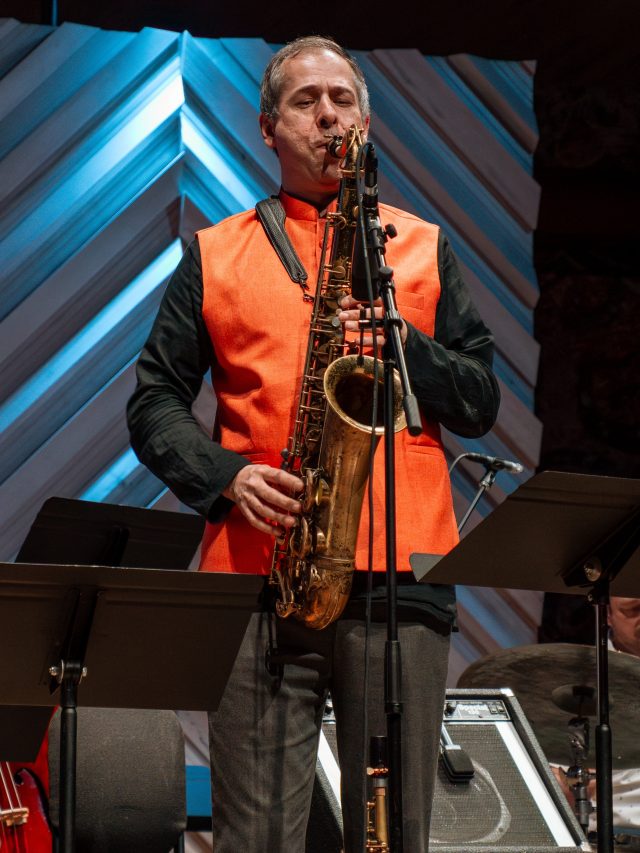
Photo by Mats Rudels (www.MatsRudels.com)
The New School’s School of Jazz & Contemporary Music was founded in 1986 on the idea that it was possible to learn the culture, history, vernacular, and common-practice of jazz at an educational institution while preserving jazz’s oral tradition, and the passing-down of that tradition through the mentor-apprentice model, which has been at the core of jazz since its inception. At the School of Jazz & Contemporary Music‘s founding, many great masters of the music, among them Reggie Workman, Jimmy Cobb, Jimmy Owens, Carline Ray, Chico Hamilton, Benny Powell, and Junior Mance, were doing just that – transmitting the jazz tradition to aspiring young musicians who wanted to be a part of the music’s great lineage.
Among the great achievements of the professors of the School of Jazz & Contemporary Music was the unionization of the faculty through Local 802 in 1998 (spearheaded by, among others, Jimmy Owens, Bob Cranshaw, and Benny Powell), building on the long and proud history of jazz musicians as activists for social, political, and economic justice. The New School did all it could to resist this unionization effort – in direct contradiction of its claim to being a socially progressive institution. And The New School continues at every turn to undermine and to seek to undo the great achievements in working conditions, job-security, and health benefits of the faculty’s unionization.
Forty years after its founding, the School of Jazz & Contemporary Music’s vision and identity have been eroded by a university leadership and a board of trustees, and the administrators doing their bidding, who have abandoned the core values, history, and culture of jazz, and instead implemented corporatist and financially-driven policies which only measure growth and success in financial terms, and deliberately and callously undermine the artistic, social, and political values that make jazz what it is.
One of The New School’s key policies which seek to undermine and undo the faculty’s unionization is to make working conditions for senior professors so intolerable that they eventually choose to leave, and then to replace these senior professors with established and up-and-coming young musicians who have fewer protections under the union contract because of the multi-tiered system of working conditions and job security The New School has forced on the union over years of contract negotiations in exchange for the union being able to preserve the faculty’s health benefits.
When senior professors such as Jimmy Owens, Andrew Cyrille, Cecil Bridgewater, Billy Harper, Buster Williams, and Joanne Brackeen leave the school, the students lose their direct and tangible connection to jazz’s elders and ancestors, and to the history of the music that these masters embody and represent. Establishing and nurturing this connection is essential for anyone who wants to be a jazz musician, and it’s the only way to become a part of this great music’s lineage.
The New School’s shortsighted, cruel, and callous austerity policies deprive its students of access to our great elder masters, and of the priceless opportunity to learn the music from those who learned from and played with the music’s originators. Why would anyone come to New York City to become a jazz musician if they were deprived of this essential and immeasurably precious aspect of learning jazz?
Aruṇ Lūthrā is a saxophonist, konnakolist, and composer. As a side musician, he has performed with Billy Harper, Charli Persip, Mike Stern, Joe Chambers, Kenny Garrett, Bobby Short, Lew Soloff, The Temptations, and The Four Tops, among many others. As the leader of his Konnakol Jazz Project he has performed across the United States as well as in Europe, the U.K., Japan, China, Australia, and South America. He joined the New School’s School of Jazz & Contemporary Music faculty in 1997, serving as the bargaining unit’s shop steward since its inception in 1998 (and as of 2018 was joined by fellow faculty members to form a cohort of stewards). www.ArunLuthraMusic.com
Personal essays published in Allegro (including MEMBER TO MEMBER) do not necessarily represent the opinions of the union or its members, officers or staff. To give feedback on this article or submit something to Allegro for consideration, send to allegro@local802afm.org.